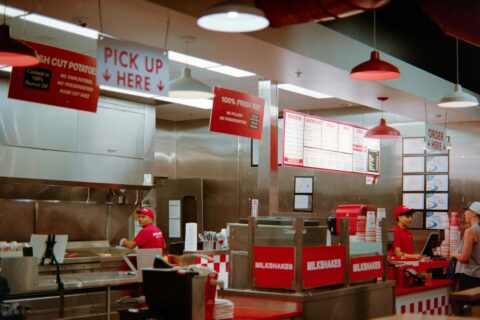
In a busy commercial kitchen, food waste can look harmless. A few unfinished plates, an over-prepared tray or ingredients that didn’t make it onto the menu rarely seem significant on their own.

Add them together across every service, however, and the numbers become difficult to ignore.

End Food Waste Australia estimates that the nation’s hospitality sector discards the equivalent of 4.6 million meals every day. Only two per cent is repurposed, with most of the remainder ending up in landfill.

That is clearly an environmental problem, but it is also stock that a business purchased, stored, prepared and paid staff to handle without ever earning a return.

This is why food waste deserves to move out of the sustainability corner and onto the operating report. As End Food Waste Australia puts it, “When food waste is measured, it’s managed – and when it’s managed, costs go down.”

The good news is that improvement does not necessarily begin with expensive equipment or a dramatic new menu. Sydney’s Opera Bar reduced its food waste by one-third through relatively straightforward changes like tracking waste, product measurement guidelines and kitchen practices like par levels.

For other venues, the first useful step may simply be separating and recording waste. Is food being lost during preparation? Are portions routinely returning unfinished? Is overproduction happening on particular shifts?

Once the patterns become visible, venues can respond with better ordering, smarter preparation, realistic portion sizes and menus that use ingredients more efficiently. Staff involvement matters too. Recording waste should be treated as a way to improve the system.

The issue is becoming more pressing. Food and labour costs remain tight, while new organic-waste requirements are increasing the need for some businesses to separate and manage food waste more carefully. Throwing usable ingredients into the bin is no longer just unfortunate; it is an operational weakness.

Reducing waste will not solve every pressure facing hospitality. It is, however, one of the few costs that a kitchen can influence during every preparation period and every service.